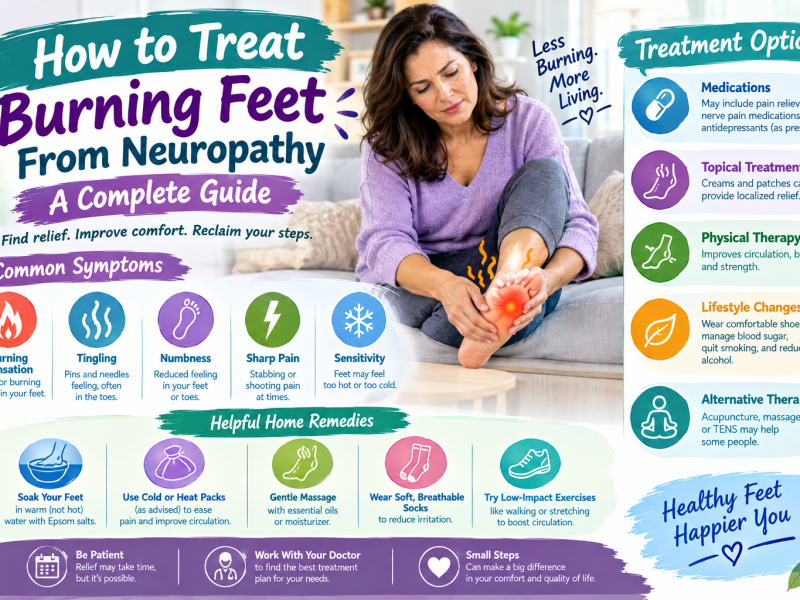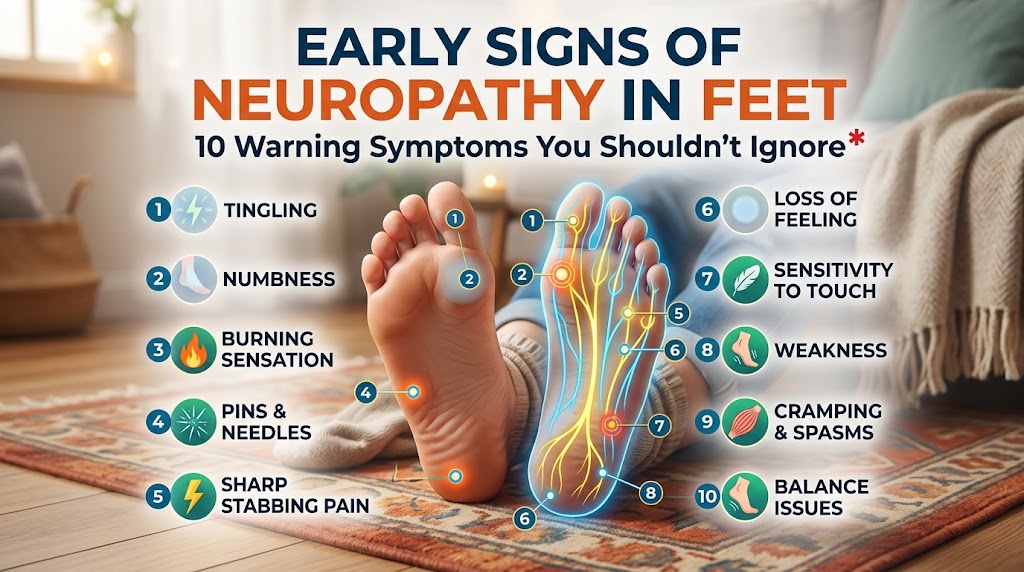
Neuropathy in the feet can begin so gradually that many people do not notice the early symptoms. A slight tingling sensation, occasional numbness, or a strange burning feeling may seem harmless at first. However, these symptoms can sometimes be early signs of peripheral neuropathy, a condition involving damage or dysfunction of the nerves outside the brain and spinal cord.
Recognizing the early signs of neuropathy in feet can be important because nerve problems may worsen over time if their underlying cause is not identified and managed. Early attention may help people understand what is causing their symptoms and take steps to protect their feet and overall health.
In this article, we’ll explore 10 warning symptoms of neuropathy in the feet that you shouldn’t ignore, along with information about possible causes and when it may be time to speak with a healthcare professional.
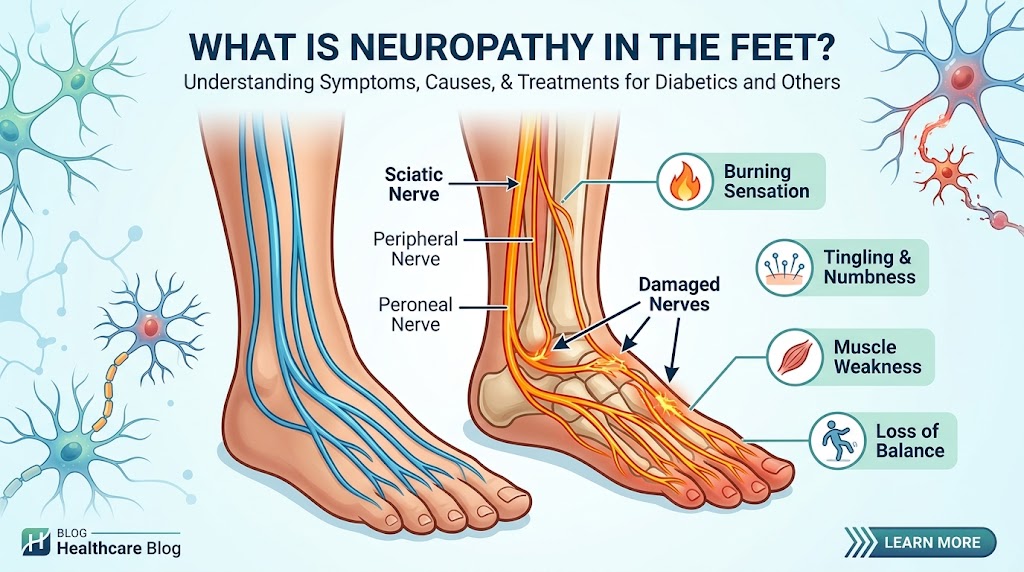
What Is Neuropathy in the Feet?
Click Here To Watch Video to Treat Neuropathy Disease Naturally!..
Peripheral neuropathy occurs when peripheral nerves become damaged or do not function properly. Because the nerves in the feet and legs are among the longest nerves in the body, symptoms often begin in the toes and gradually move upward.
The nerves in your feet perform several important functions. They help you:
- Feel temperature, pressure, and pain
- Sense the position of your feet while walking
- Control certain muscles
- Detect injuries such as cuts or blisters
When these nerves are affected, you may experience unusual sensations, reduced feeling, pain, or weakness.
For many people, the first symptoms are subtle. Paying attention to changes in how your feet feel can help you recognize potential problems earlier.
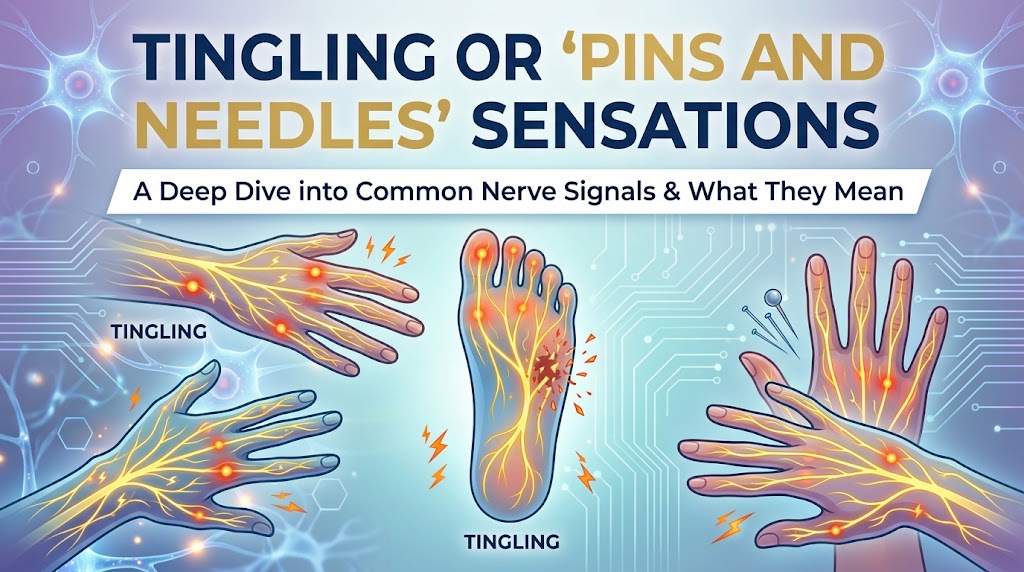
1. Tingling or “Pins and Needles” Sensations
Click Here To Watch Video to Treat Neuropathy Disease Naturally!..
One of the most common early signs of neuropathy in feet is a tingling sensation. Some people describe it as:
- Pins and needles
- Prickling
- Buzzing
- A crawling sensation
- Mild electrical sensations
You may notice tingling in one or both feet, particularly in the toes. Initially, it may come and go. Over time, however, the sensation may become more frequent or persistent.
Occasional tingling can happen for harmless reasons, such as sitting in one position for too long. But repeated or unexplained tingling in the feet may deserve medical attention, especially if it continues or gradually worsens.
2. Numbness in the Toes or Feet
Numbness is another common warning sign of neuropathy. You may notice that your toes feel less sensitive than usual or that parts of your feet feel as though they are “asleep.”
In the early stages, numbness may affect only a few toes. As nerve problems progress, the reduced sensation may spread across the foot and sometimes upward toward the ankles or legs.
Numbness can create additional problems because you may not notice minor injuries. For example, you might develop:
- A blister
- A cut
- A splinter
- A pressure sore
- A burn from hot surfaces
Without normal sensation, these injuries may go unnoticed and potentially become more serious.
3. Burning Sensations in the Feet
A burning feeling is another symptom that some people experience with peripheral neuropathy. Your feet may feel unusually warm or as though they are burning, even when they feel normal to the touch.
The burning sensation may be mild at first and become more noticeable during the evening or at night. Some people find that their feet become more uncomfortable when they are trying to rest or sleep.
Burning foot pain can have several possible causes, so it does not automatically mean that you have neuropathy. However, persistent or unexplained burning sensations should not be ignored.
4. Increased Sensitivity to Touch
Neuropathy does not always cause a loss of sensation. In some cases, damaged nerves can become overly sensitive.
This may cause ordinary sensations to feel painful or uncomfortable. For example, you may find that:
- Socks feel irritating
- Bed sheets touching your feet cause discomfort
- Light pressure feels painful
- Shoes suddenly feel uncomfortable
This type of increased sensitivity can interfere with daily activities and sleep.
If gentle touch regularly causes pain or discomfort, discussing the symptom with a healthcare professional may help determine the underlying cause.
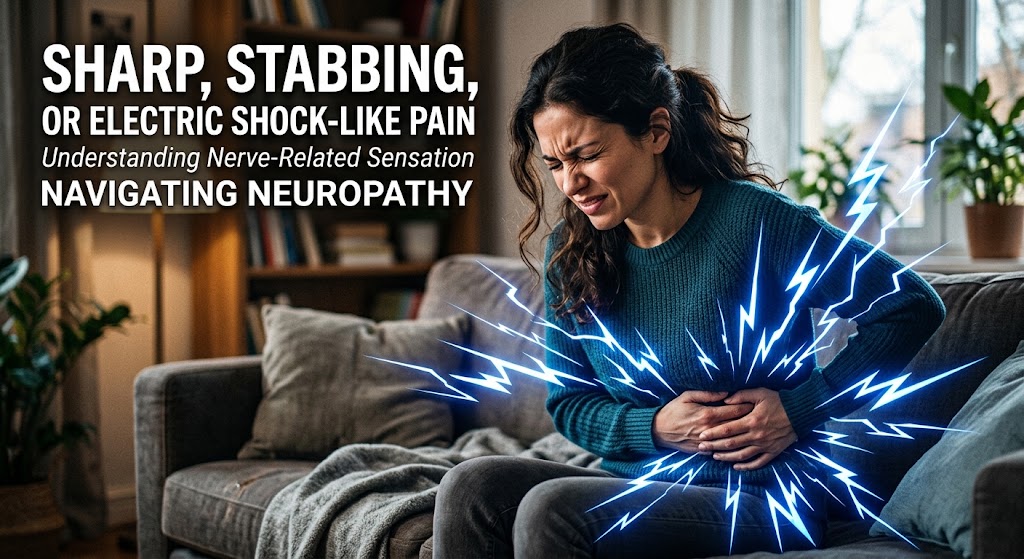
5. Sharp, Stabbing, or Electric Shock-Like Pain
Click Here To Watch Video to Treat Neuropathy Disease Naturally!..
Some people with neuropathy experience sudden, unusual pain in their feet. The pain may feel:
- Sharp
- Stabbing
- Shooting
- Jabbing
- Like an electric shock
These sensations may occur without an obvious injury. They can appear suddenly and disappear quickly, or they may happen repeatedly.
Neuropathic pain is often different from pain caused by a muscle strain or physical injury. Instead of being linked to movement or pressure, it may occur spontaneously because of abnormal nerve signaling.
If unexplained shooting or electric-like pain becomes frequent, it is worth seeking medical advice.
6. Loss of Balance or Coordination
The nerves in your feet provide important information to your brain about where your body is positioned. When these sensory nerves are affected, balance and coordination may become more difficult.
You may notice that you:
- Feel unsteady while walking
- Have difficulty walking in the dark
- Need to look at your feet more often
- Feel less stable on uneven surfaces
- Trip or stumble more frequently
Balance problems can have many possible causes, including inner ear problems, muscle weakness, medication effects, and neurological conditions. However, reduced sensation in the feet can also contribute.
Frequent falls or new balance problems should always be taken seriously.
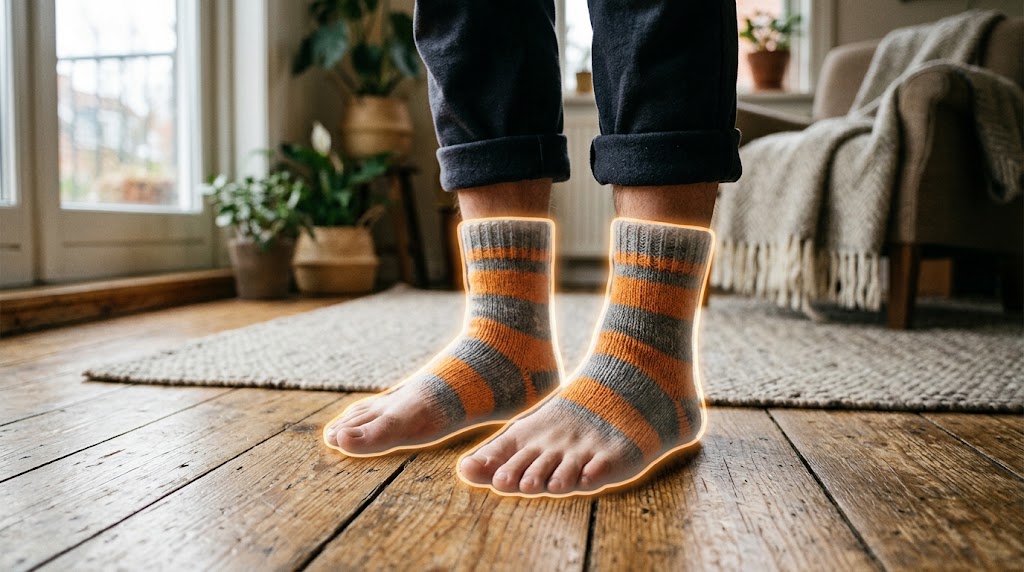
7. Feeling Like You’re Wearing Socks When You’re Barefoot
Click Here To Watch Video to Treat Neuropathy Disease Naturally!..
A particularly unusual symptom of neuropathy is the sensation that you are wearing socks or shoes when you are actually barefoot.
This can happen when the brain receives inaccurate or abnormal signals from damaged sensory nerves. Some people describe their feet as feeling:
- Wrapped
- Padded
- Thick
- Tight
- Covered by an invisible layer
This sensation can be subtle at first, but it may become more noticeable over time.
If your feet repeatedly feel different from normal without an obvious explanation, it may be helpful to discuss the symptom with a medical professional.
8. Muscle Weakness in the Feet or Legs
Depending on which nerves are affected, neuropathy can sometimes lead to muscle weakness.
You might notice difficulty:
- Lifting the front of your foot
- Moving your toes
- Walking long distances
- Climbing stairs
- Maintaining a steady walking pattern
Muscle weakness can also increase the risk of tripping and falling.
It is important not to assume that weakness is simply a normal part of aging. New, worsening, or sudden weakness should be evaluated because it can have many possible causes, some of which require prompt medical attention.
9. Symptoms That Become Worse at Night
Many people notice that neuropathy symptoms become more noticeable during the evening or nighttime.
You may experience:
- Increased tingling
- Burning sensations
- Sharp pain
- Restlessness
- Greater sensitivity to bed sheets
The exact reason symptoms can feel worse at night varies. During the day, movement and other activities may distract you from mild sensations. When your environment becomes quiet, nerve-related symptoms may become more noticeable.
Nighttime discomfort can interfere with sleep, leading to fatigue and reduced quality of life.
If unusual sensations in your feet regularly disturb your sleep, it may be worth investigating the cause.
10. Reduced Ability to Feel Heat, Cold, or Pain
A reduced ability to sense temperature or pain can be a serious warning sign.
For example, you might not immediately notice that:
- Bathwater is too hot
- A heating pad is overheating
- You stepped on something sharp
- Your shoe is causing a blister
Loss of protective sensation increases the risk of accidental injuries.
This is why regular foot checks can be especially important for people who have reduced sensation. Looking at your feet daily can help you identify cuts, blisters, redness, swelling, or other changes that you may not be able to feel.
What Causes Neuropathy in the Feet?

Click Here To Watch Video to Treat Neuropathy Disease Naturally!..
Neuropathy can develop for many different reasons. Some possible causes include:
Diabetes
Diabetes is one of the most common causes of peripheral neuropathy. Long-term high blood sugar can damage nerves and blood vessels that support nerve health.
Vitamin Deficiencies
Certain vitamins are important for healthy nerve function. Nutritional deficiencies may contribute to nerve problems in some people.
Alcohol Use
Long-term heavy alcohol use may contribute to nerve damage directly or through nutritional deficiencies.
Certain Medications
Some medications can affect the nervous system and may contribute to neuropathy.
Autoimmune or Inflammatory Conditions
Certain immune-related conditions may affect peripheral nerves.
Kidney or Liver Problems
Chronic medical conditions that affect the body’s ability to remove waste products can sometimes contribute to nerve damage.
Injuries or Nerve Compression
Physical injuries, repetitive pressure, or nerve compression may cause numbness, tingling, or pain in specific areas.
Because neuropathy has many possible causes, identifying the underlying reason is an important part of evaluation.
When Should You See a Doctor?
You should consider speaking with a healthcare professional if you experience persistent or worsening:
- Tingling
- Numbness
- Burning
- Sharp nerve-like pain
- Loss of sensation
- Muscle weakness
- Balance problems
Seek prompt medical attention for sudden weakness, sudden loss of sensation, severe symptoms, or symptoms that rapidly worsen.
A healthcare professional may review your medical history, perform a physical and neurological examination, and recommend additional tests if needed.
How Can You Protect Your Feet?

Click Here To Watch Video to Treat Neuropathy Disease Naturally!..
If you have symptoms that may be related to neuropathy, protecting your feet can be an important part of your daily routine.
Consider the following habits:
- Check your feet regularly for cuts or blisters
- Wear properly fitting shoes
- Avoid walking barefoot in areas where you could be injured
- Test bathwater carefully before stepping in
- Keep your feet clean and dry
- Pay attention to changes in skin color or swelling
- Seek medical care for wounds that do not heal properly
These simple habits may help reduce the risk of injuries, particularly if you have reduced sensation in your feet.
Final Thoughts
The early signs of neuropathy in feet can be easy to overlook. Tingling, numbness, burning, unusual pain, and changes in balance may initially seem minor, but persistent symptoms deserve attention.
The 10 warning signs discussed in this article include:
- Tingling or pins and needles
- Numbness
- Burning sensations
- Increased sensitivity to touch
- Sharp or electric shock-like pain
- Balance problems
- Feeling like you’re wearing socks when barefoot
- Muscle weakness
- Symptoms that worsen at night
- Reduced ability to feel heat, cold, or pain
Neuropathy can have many different causes, and early evaluation may help identify underlying health issues before symptoms become more severe.
If you are experiencing persistent changes in how your feet feel, don’t ignore them. Speaking with a qualified healthcare professional can help you understand what may be causing your symptoms and what next steps may be appropriate.
Disclaimer: This article is for informational purposes only and should not be considered medical advice. Always consult a qualified healthcare professional regarding symptoms, diagnosis, or treatment.